




OII Researcher Dr Fabian Braesemann wins European AI Innovation Award
16 December 2025
OII Researcher Dr Fabian Braesemann wins European AI Innovation Award for research-based Founder Personality Quiz.
16 December 2025
OII Researcher Dr Fabian Braesemann wins European AI Innovation Award for research-based Founder Personality Quiz.
10 December 2025
The OII's Dr Fabian Braesemann examines the dynamics of the software world and what Stack Overflow tells us about the ‘creative destruction’ of programming technologies.
4 December 2025
A new joint study from the Oxford Internet Institute (OII) and the AI Security Institute (AISI) uncovers how conversational AI sways political beliefs and why it works.
12:00 -13:00, Schwarzman Centre
With Dr Fabian StephanyAI is often seen as a job killer — but our latest OII study suggests it could actually help you get hired. A new international experiment shows that AI skills significantly improve a candidate’s chances of being invited to an interview.
Find out more about research by OII academics
Associate Professor Digital South Asian Studies
Janaki's research examines the politics of digital exclusion in India. She uses ethnographic and archival research to examine how gender, caste and class have shaped the use of information and information technologies in varied contexts.
Professor of Data Ethics and Policy
Professor Brent Mittelstadt is a data ethicist and philosopher specializing in AI ethics, professional ethics, and technology law and policy. He is the founder/coordinator of the Governance of Emerging Technologies (GET) programme.
Director of Graduate Studies, Associate Professor, Senior Research Fellow
Bernie Hogan examines how to capture, represent and think about social networks, especially personal social networks. His work focuses on the role of design in social media, network capture techniques and theories of relationships.
This project seeks to understand how citizens listen and speak to public institutions, and how alternative AI-based models and framing might encourage democratic communication.
With mobile devices ubiquitous among young people, it is not surprising that parents are increasingly turning to technology for help in childcare. This project examines monitoring technologies and how parents use them as part of child supervision.
The shift to cloud represents a reversal of the 1980s personal computing revolution: computation is moving from personal devices back into large, centralized facilities. This project seeks to understand the economic drivers of this reversal.
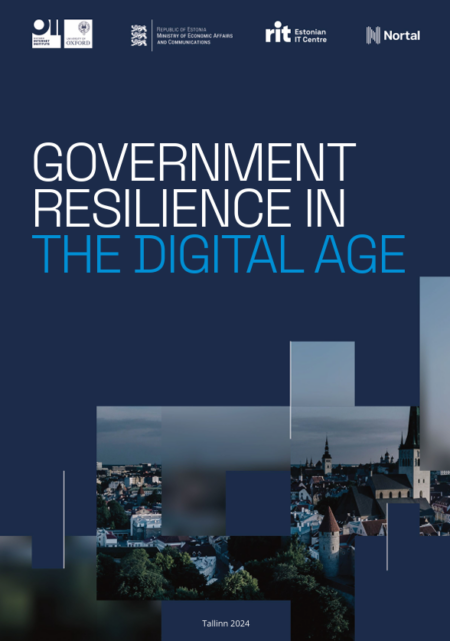
By Andres Raieste, Andri Rebane, Madis Tapupere, Keegan McBride
In a world increasingly defined by crises—from pandemics and climate disasters to escalating wars—governments that fail to build digital resilience risk crumbling under pressure.
Politico, 17 December 2025
The EU wants to regulate, while the U.S. government is letting companies run free. What’s behind the divergent approaches goes back a century. The OII's Prof. Mariarosaria Taddeo comments.
Investment Monitor, 15 December 2025
Mark Graham, founder of the Fairwork initiative, notes that most of the human labour in the AI supply chain is data work in low-income countries done under poor conditions.
Reuters, 11 December 2025
Speaking to Reuters, AI researcher Fabian Stephany from the University of Oxford commended Time's decision to laud the developers involvement in AI's evolution, but said the human aspect should go even further.
Fabian Braesemann and Paul McCarthy discuss the impact of founder personalities on startup success, how a predictive model outperforms industry standards to predict company success, and what factors can help us predict which startups will succeed.