About
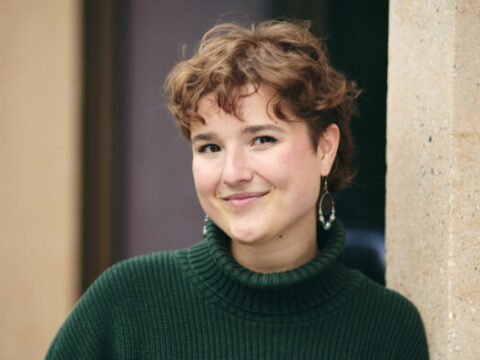
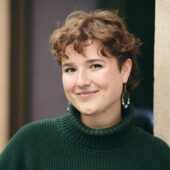
Professor Luc Rocher is an associate professor and UKRI Future Leaders Fellow at the Oxford Internet Institute. Luc leads the Synthetic Society Lab, a research group working to make technology and digital power accountable to the public, and guide the development of accountable, sustainable, and safe algorithms that serve the public interest.
Their research investigates the risks posed by large-scale collections of digital human traces from social media to biometrics as well as deployed AI technologies, identifying gaps in how technology is regulated and how risks are documented, and proposing better models for academic research using sensitive human data. Their research currently investigates privacy-enhancing technologies, pricing algorithms in online markets, public sector algorithms, social media recommendation systems, and citizen-led AI efforts.
Luc specialises in human-centred computing approaches to investigate how humans and algorithms interact. Their research develops statistical models to make sense of these complex systems, adversarial machine learning approaches to highlight weaknesses of deployed technologies, and interactive tools to better understand what makes us vulnerable to privacy harms online.
Luc’s research provides technical guidance to the challenges AI poses for competition law in digital platforms and data protection regulation online. Their work in Nature Communications for instance demonstrated the limits of traditional techniques to de-identify and widely share ‘anonymous’ data online, calling for better privacy-preserving frameworks to disseminate and analyse personal data online.
Prior to joining Oxford, Luc received a PhD from the Université catholique de Louvain in 2019 and worked as a researcher at the Data Science Institute and Computational Privacy Group of Imperial College London, at the ENS de Lyon, and at the MIT Media Lab.
Their work has been published in peer-reviewed journals and conferences (Nature Communications, Science Advances, Nature Machine Intelligence, Nature Scientific Data, Usenix Security, JMLR, WWW) and has been covered by 160+ newspapers (New York Times, The Guardian, The Telegraph, Forbes, El Pais, Scientific American) as well as featured in John Oliver’s Last Week Tonight, BBC World Service, France TV, and Radio Canada. Their research on the limitation of anonymisation practices has been referenced by the European Commission, OECD, World Bank, WEF, FTC, by European data protection authorities, in US legal cases, and led to changes to the UK’s Data Protection Bill.
Luc was General Chair of Hot Topics in Privacy Enhancing Technologies (HotPETS) in 2023 and 2024, and has been Area Chair for the ACM FAccT Conference on Fairness, Accountability and Transparency in 2024 and 2025. They sit on a range of programme committees and have reviewed from numerous journals including Nature, Nature Communications, Science Advances, and Big Data & Society.
Luc leads the Observatory of Anonymity, an international interactive website in 89 countries where visitors can find out what makes them more vulnerable to re-identification and where researchers can test the anonymity of their research data.
Pronouns: they/them.
Areas of interest for Doctoral Supervision:
I am looking for motivated students interested in studying the impact of privacy-enhancing technologies and auditing algorithms used by public institutions and online platforms. Interest in HCI, AI fairness and human-centred evaluations, mathematical modelling and complex systems appreciated (including Bayesian statistics, optimisation, network science, machine learning, Python/Julia programming). Further information on the Synthetic Society Lab website.