

Research Programme on AI, Government and Policy
This programme supports research on AI, Government and Policy.

Chris Russell is the Dieter Schwarz Associate Professor, AI, Government and Policy.
Dr Russell’s work lies at the intersection of computer vision and responsible AI. His career to date illustrates a commitment to exploring the use of AI for good, alongside responsible governance of algorithms.
His recent work on mapping for autonomous driving won the best paper award at the International Conference on Robotics and Automation (ICRA). He has a wide-ranging set of research interests, having worked with the British Antarctic Foundation to forecast arctic melt; as well as creating one of the first causal approaches to algorithmic fairness. His work on explainability with Sandra Wachter and Brent Mittelstadt of the OII is cited in the guidelines to the GDPR and forms part of the TensorFlow “What-if tool”.
Dr Russell has been a research affiliate of the OII since 2019 and is a founding member of the Governance of Emerging Technology programme, a research group that spans multiple disciplines and institutions looking at the socio-technical issues arising from new technology and proposing legal, ethical and technical remedies. Their research focuses on the governance and ethical design of algorithms, with an emphasis on accountability, transparency, and explainable AI.
Prior to joining the OII, he worked at AWS, and has been a Group Leader in Safe and Ethical AI at the Alan Turing Institute, and a Reader in Computer Vision and Machine Learning at the University of Surrey.
Algorithmic Fairness, Explainable AI, machine learning, computer vision.
This programme supports research on AI, Government and Policy.

This project will develop useful and responsible machine learning methods to achieve real-world early detection and personalised disease outcome prediction of inflammatory arthritis.

This OII research programme investigates legal, ethical, and social aspects of AI, machine learning, and other emerging information technologies.

6 July 2026
AI tools used to generate, edit or contextualise social media posts can introduce hidden biases that spread through online networks and shape public opinion, according to new research from the OII and the Hasso Plattner Institute.
22 April 2026
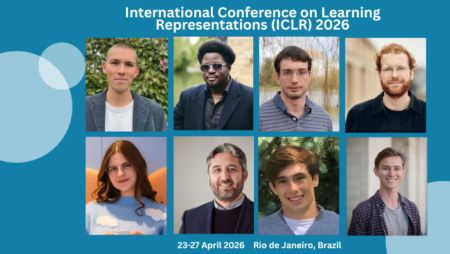
OII researchers and DPhil students will attend the 14th International Conference on Learning Representations in Rio de Janeiro from 23–27 April 2026.
25 November 2025
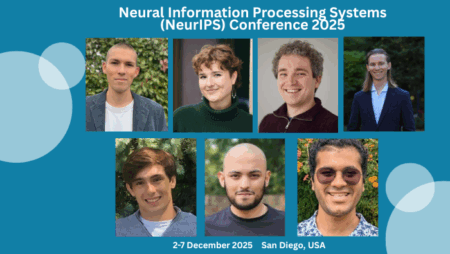
Researchers from the Oxford Internet Institute at the University of Oxford will be at NeurIPS 2025 in San Diego from 1- 7 December, 2025, contributing to one of the world’s leading AI conferences.

7 May 2025
New Oxford study uncovers explosion of accessible deepfake AI image generation models intended for the creation of non-consensual, sexualised images of women.
OpenDemocracy, 24 July 2026
Exclusive: A handful of US tech firms are shaping intimate medical decisions – with little transparency about answers, with latest commentary from the OII's Dr Chris Russell.

FT, 09 July 2026
Disinformation and deepfakes are known risks but biased LLMs could also be used to influence public opinion with commentary from Prof. Sandra Wachter.

Somewhere on Earth: The Global Tech Podcast, 07 July 2026
A new study suggests that the AI tools many of us use every day on platforms like LinkedIn, X and Google may be doing more than improving our grammar and polishing our posts.

DPhil Student
Jonathan is a DPhil student in Social Data Science at the OII. Jonathan's research focus is socio-technical evaluations of multimodal human-AI interactions.

DPhil Student
Karolina is a DPhil student in Social Data Science and a Clarendon Scholar at the OII. Her research focuses on the societal impacts of advanced AI systems.

DPhil Student
Ryan is a DPhil student at the Oxford Internet Institute, focused on AI fairness, with research interests in technical fairness methodologies, NLP, and deep learning.

DPhil Student
Kaivalya worked on AI explainability and fairness at Oxford. He built upon his work auditing and testing machine learning models in industry and in academia, making AI systems safe and trustworthy.

DPhil Student
William Lugoloobi is a Rhodes Scholar and DPhil student at the Oxford Internet Institute, where his research sits at the intersection of AI safety, mechanistic interpretability, and agentic systems.
This course covers the fundamentals of both supervised and unsupervised learning.