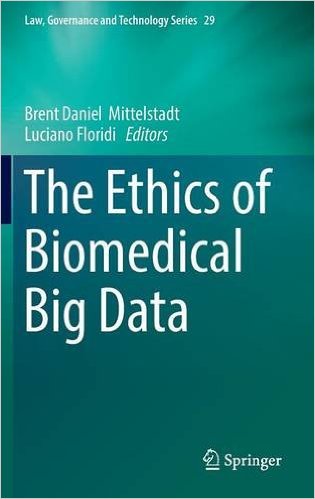
By Brent Daniel Mittelstadt (Editor) and Luciano Floridi (Editor)
This book presents cutting edge research on the new ethical challenges posed by biomedical Big Data technologies and practices.
The internet and new technologies present equally new ethical dilemmas: Should we use automated decision-making systems that are incompressible to the people they effect? How should our personal data be handled after our deaths? To what degree can firms and states use our data to make inferences about our activities and wants?
Our researchers work at the forefront of internet ethics. Our projects tackle both theoretical questions – like the possibility of explaining complex ‘black-box’ algorithms – and more practical ones – like the content of a new European ethical code for post-humous medical data donation.
By Brent Daniel Mittelstadt (Editor) and Luciano Floridi (Editor)
This book presents cutting edge research on the new ethical challenges posed by biomedical Big Data technologies and practices.
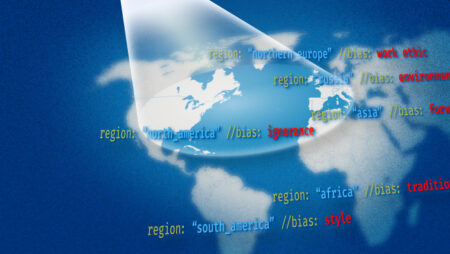
Based on a case-study analysis of bias in the Chicago Crime Prediction Algorithm, this project explores the extent to which evidence of algorithmic bias can be used to guide policy responses to the societal disparities replicated in these tools.
This project will evaluate the effectiveness of accountability tools addressing explainability, bias, and fairness in AI. A ‘trustworthiness auditing meta-toolkit’ will be developed and validated via case studies in healthcare and open science.
This project transforms the concept of counterfactual explanations into a practically useful tool for explaining automated black-box decisions.
25 November 2025
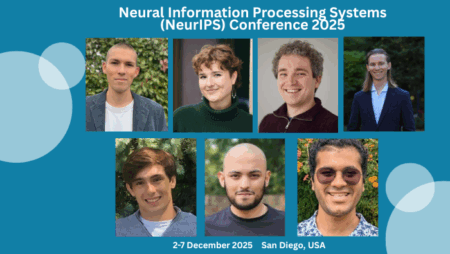
Researchers from the Oxford Internet Institute at the University of Oxford will be at NeurIPS 2025 in San Diego from 1- 7 December, 2025, contributing to one of the world’s leading AI conferences.
17 November 2025
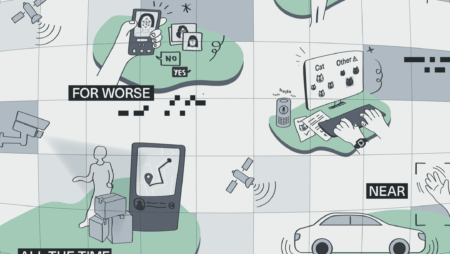
Jason I. Kim, Visiting Policy Fellow, Oxford Internet Institute, considers how digital ecosystems learn to defend at the speed of change.
4 November 2025
Largest systematic review of AI benchmarks highlights need for clearer definitions and stronger scientific standards.
27 October 2025
The OII is pleased to announce Dr Scott A. Hale appointed as its next Director, and Dr Kathryn Eccles as Deputy Director.
Reuters, 11 December 2025
Speaking to Reuters, AI researcher Fabian Stephany from the University of Oxford commended Time's decision to laud the developers involvement in AI's evolution, but said the human aspect should go even further.
MIT Technology Review, 05 December 2025
A conversation with a chatbot can shift people's political views—but the most persuasive models also spread the most misinformation.
The Guardian, 05 December 2025
‘Information-dense’ AI responses are most persuasive but these tend to be less accurate, says security report by the OII's Kobi Hackenburg and Prof. Helen Margetts.