



Keeping Europe’s Technological Choices Open
2 July 2026
In an age of AI chokepoints, Europe’s choices will depend on the capacities it builds now. The OII's Johanna Ballesteros and TUM's DR Nicklas Berild Lundblad explain why.
The Oxford Internet Institute (OII) is a multidisciplinary research and teaching department at the University of Oxford, dedicated to exploring the implications of emerging technologies for how people live, work and govern.
2 July 2026
In an age of AI chokepoints, Europe’s choices will depend on the capacities it builds now. The OII's Johanna Ballesteros and TUM's DR Nicklas Berild Lundblad explain why.

24 June 2026
A new working paper by OII researchers argues that EU technology policy should hold AI companies to account for actual public wellbeing, not just reduced risk.

16 June 2026
The OII's Dr Vicki Nash warns that a social media ban risks leaving teenagers 'protected' but disempowered, cut off from news, learning and support at the very moment the UK is preparing to give 16-year-olds the vote.
We examine the opportunities and challenges posed by transformative innovations such as artificial intelligence, machine learning, digital platforms, and autonomous agents.
Our work is multidisciplinary and multi-method. We bring together diverse academic traditions to study the digital age through qualitative, quantitative and computational approaches.

With gig work rapidly expanding, how can research help make the platform economy fairer for workers?

How data concentration by dominant digital firms affects competition and innovation.

The challenge: is screen time really harmful?
The Synthetic Society Lab aims to improve how we research, access, and use sensitive human data. The fellowship will advance an evidence-based science of privacy engineering to make research using digital traces safe and reliable.

This project investigates how worker representation in German firms shapes AI use and adoption, asking whether employee voice at firms can steer AI toward complementing workers rather than automating them.

This project investigates how digital skills develop in the absence of traditional family support structures and aims to identify any critical and overlooked gaps that emerge.
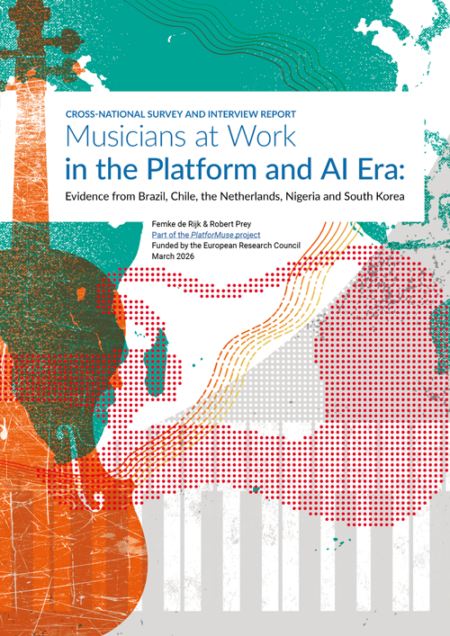
By Femke de Rijk and Robert Prey
A new report from the Oxford Internet Institute and the University of Groningen identifies the 'streaming paradox' with evidence from five countries - Brazil, Chile, the Netherlands, Nigeria and South Korea.

Die ZEIT, 14 June 2026
Mithilfe meiner Daten habe ich einen KI-Agenten geschaffen. Er ruft für mich im Restaurant an, plaudert mit Kollegen und führt Interviews. Leider: besser als ich.

Fortune Magazine, 16 June 2026
As Washington's decision to cut off global access to Anthropic's most powerful AI models sent shockwaves through governments and institutions, Prof Sandra Wachter shared her perspective with Fortune Magazine.

Al Jazeera, 15 June 2026
As the UK proposes banning under-16s from social media, OII DPhil Bhargav Srinivasa Desikan asks whether targeting users, rather than the product, is really the right approach.